

The Madras High Court on Wednesday quashed the criminal complaints filed against a group of editors and journalists such as N Ram, Editor-in-Chief of The Hindu, Siddharth Varadarajan, Nakkeeran Gopal etc.
The complaints were lodged in 2012 alleging “criminal defamation against State’ in few reports against J Jayalalitha, the then Chief Minister of Tamil Nadu.
Criminal complaints were filed by the Public Prosecutor before the Sessions Court under Section 199(2) of the Code of Criminal Procedure alleging defamation of a state functionary
Section 199(2) CrPC lays down a special procedure prosecutionfor defamation against state/constitutional functionaries under Section 499/500 of the Indian Penal Code. The complaint is filed by the Public Prosecutor on behalf of the State before the Sessions Court whereas normal defamation cases are filed before the Magistrate’s Court.
The writ petitions filed in the HC challenged the constitutional validity of the government orders which allowedpublic prosecutor to file complaints under Section 199(2) CrPC in respect of the reports.
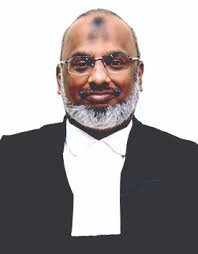
Observing that there is a higher threshold for the State to initiate criminal defamation against citizens, when compared to ordinary cases of defamation, the bench of Madras hc of Justice Abdul Quddhose noted,
“The Criminal defamation law is meant for a laudable object in real cases of necessity and cannot be misused by using the State as a tool to settle scores of a public servant/constitutional functionary over his/her adversary. A public servant/constitutional functionary must be able to face criticism. As public servants/constitutional functionaries, they owe a solemn duty to the people. The state cannot use criminal defamation cases to throttle democracy”, the Court observed in the 152-page judgment.
The Court added that the State has to maintain higher tolerance with respect to criticism, and cannot be “impulsive” to launch prosecution.
“The State should not be impulsive like an ordinary citizen in defamation matters and invoke section 199(2) Cr.P.C. to throttle democracy. Only in cases where there is foolproof material and when launching of prosecution under section 199(2) Cr.P.C. is inevitable, the said procedure can be invoked”
“An individual or a public servant/constitutional functionary can be impulsive but not the State which will have to show utmost restraint and maturity in filing criminal defamation cases. If the State becomes an impulsive prosecutor in criminal defamation matters that too in an era of social media where there are scores of abusive contents made against public figures, the Sessions Court will get clogged with innumerable matters which are sometimes vindictive in nature only to settle scores with opposition political parties”
Comparing the State to a “parent”, the Court observed,
“State is like a parent for all citizens in so far as Defamation law is concerned. It is normal for some parents to face vituperative insults from their children. Despite those insults, parents don’t disown their children quite easily. They always have the hope that their children will mend themselves in the near future. Only in rarest of rare cases when the character and behaviour of their children is irretrievably broken down and irreconcilable, the parents disown them.
The attitude of the State with regard to defamation must also be the same as their tolerance level towards its citizens in so far as defamation is concerned must be akin to that of parents. When the state is having other avenues under law to make the offender realise the mistake if any, the criminal defamation law under section 499 and 500 IPC should be sparingly used by the State”.
Notably, the judgment referred to the recent speeches delivered by Justice Deepak Gupta, former SC judge and Justice D Y Chandrachud, SC judge, wherein they highlighted the importance of dissent in democracy and criticized the growing tendency of using criminal law to silence dissenting voices.
The Court referred to the principles laid down by the apex court in the caseDr Subramanian Swamy vs Union of India regarding the use of criminal defamation. Though the petitioners had also challenged the constitutional validity of Section 499/500 of the Indian Penal Code, the HC did not deal with that aspect, as it was upheld by the SC in 2016 in the Subramanian Swamy case.
Two weeks ago, the Madras HC had quashed criminal defamation proceedings against a reporter and editor of Economic Times holding that mere inaccuracies in reporting do not amount to defamation, in the absence of actual malice.
Level of Scrutiny by Sessions Court under Section 199(2) higher
After examining the statistics, the court noted that from the year 2012 to 2020, 226 cases are pending on the file of various Sessions courts till date.
Irrespective of which political party is in power, cases under section 199(2) Cr.P.C. have been filed. The Sessions Courts are sometimes clogged with matters under section 199(2) due to the mechanical filing of the complaints.
Reminding the Sessions Judges that they have to exercise higher level of scrutiny with respect to criminal defamation complaints by the State, the HC observed,
“The level of scrutiny by a Sessions Court under section 199(2) Cr.P.C. is much higher than the scrutiny by a Magistrate under section 199(6) Cr.P.C. Before taking cognizance under section 199(2) Cr.P.C., the Sessions court can even order for further investigation. The Sessions court cannot mechanically take cognizance of the complaint and issue process to the accused. The court will have to independently apply its judicial mind and assess the materials and only if it is satisfied take cognizance of the complaint. The materials assessed shall be indicated by the Sessions Court in its order taking cognizance of the complaint filed under section 199(2) Cr.P.C”
Public Prosecutor not to act like a post office
The Court said that Public Prosecutor should not act like a “post office” by merely filing complaints at the directives of the State, and should independentlyscrutinize the allegations before filing the complaint.
“In defamation cases filed under Section 199(2) Cr.P.C., the public prosecutor plays a very vital role. The role is very special because in those matters, the public prosecutor plays a dual role both as a person representing the public servant/constitutional functionary as well as a public prosecutor. Therefore, the cardinal principles mentioned supra will have to be strictly adhered to by the public prosecutor while filing complaints under section 199(2) Cr.P.C”.
Ingredients of defamation missing
The Court noted that in all the cases, the core ingredient required under section 199(2) Cr.P.C. namely “Defamation of the State” is missing.
It was noted that while granting sanction for prosecution the respective sanction orders were totally silent as to whether the state has been defamed on account of the alleged defamation of the public servant/constitutional functionary while discharging his/her public functions.
“in all the cases which are the subject matter of consideration by this court, the State has sanctioned prosecution in a mechanical fashion by total non application of mind as the fundamental requirement for prosecution under section 199(2) Cr.P.C. namely “Defamation of the State” does not find a place in all the sanction orders. The public prosecutor as well as the Sessions Judge in cases where cognizance has already been taken by the Sessions Court have also not applied their mind independently as the core essence of prosecution under section 199 (2) Cr.P.C. namely “Defamation of the state” has not been satisfied as seen from the sanction orders. On this score alone, all the Government Orders and the consequential complaints for criminal defamation under section 199(2) Cr.P.C. will have to fail”
Media should exercise self-regulation
Remarking on the importance of the media to exercise self-regulation, the court stated,
“Our nation has always respected the role of the media and has highest regard for their independent and truthful reporting. But of late for quite number of years, there seems to be some decay happening in every sphere of democracy including the Media. If the rottenness is not removed sooner than later, it will spread like fire causing great peril to our robust Democracy. The newspaper is a great power, but just as an unchained torrent of water submerges the whole countryside and devastates crops, even so an uncontrolled pen serves but to destroy. If the control is from without, it proves more poisonous than want of control. It can be profitable only when exercised from within.”
Case Details
Title:Thiru N Ram, Editor-In-Chief, “The Hindu” vs Union of India and connected cases
Coram: Justice Abdul Quddhose
Advocates: Senior Advocates P S Raman, I.Subramanian, Advocates P.T.Perumal, Prasanth Rajagopal, S.Elambharathi, M.Sneha, .P.Kumaresan, B.K.GirishNeelakantan for petitioners.
Madana Gopal Rao, Central Government Standing Counsel and S.R.Rajagopalan, Additional Advocate General assisted by Mr.K.Ravikumar, learned Additional Government Pleader
Read below:
